

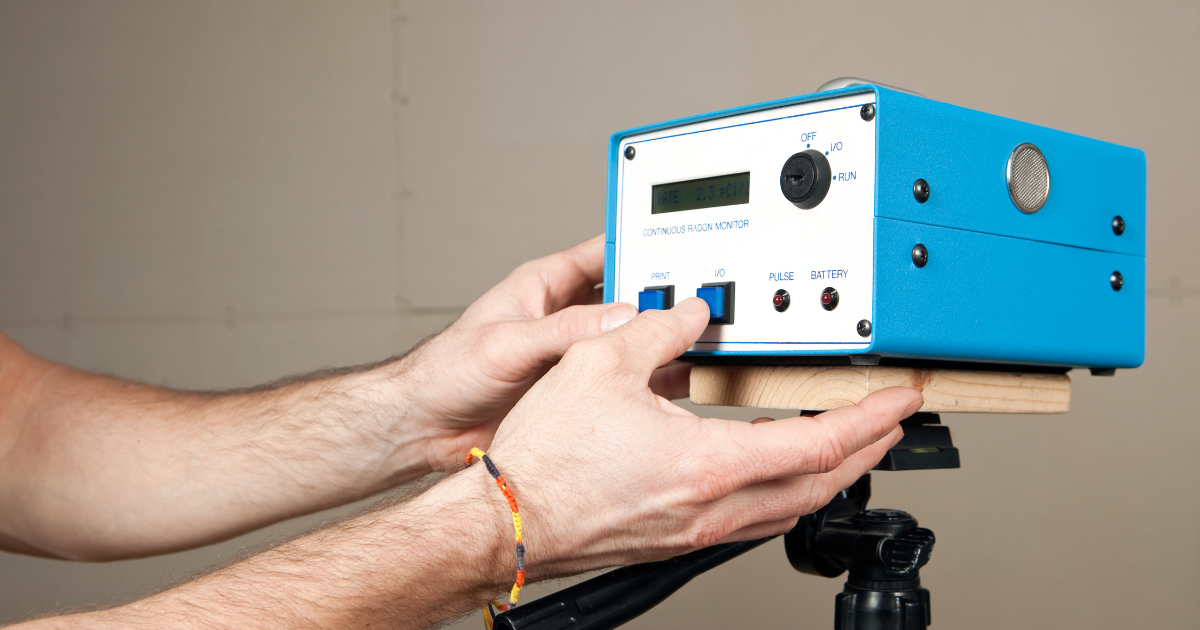
Radon is a naturally occurring radioactive gas found in every home in Canada, and it is the leading cause of lung cancer among non-smokers. Since it is colourless and odourless, the only way to know whether your home has an elevated level is to test for it, and Health Canada recommends a long-term test of at least three months, ideally completed during fall or winter when windows and doors stay closed.
Why This Matters More Than Most Homeowners Realize
Radon forms from the natural breakdown of uranium in soil and rock, and it seeps into homes through foundation cracks, gaps around pipes, sump pits, and other openings in contact with the ground. Health Canada’s guidance explains that radon can build up to high levels in confined spaces like homes and become a health risk over time, with the risk tied to long-term exposure rather than short-term contact.
Because there is no smell, taste, or visible sign, a home can have an elevated radon level for years without anyone knowing. Testing is the only way to find out.
Why This Is Worth Raising as an HVAC Topic
Radon mitigation and your home’s heating and ventilation systems are more connected than most homeowners expect. Measures that reduce air exchange with the outdoors, like sealing up a home for efficiency, can sometimes allow radon to concentrate further if ventilation is not properly managed. On the other hand, mechanical ventilation systems like HRVs, the same equipment that helps manage general indoor air quality, can play a role in diluting radon concentrations as part of a broader mitigation strategy. We cover the ventilation side of indoor air quality more generally in Indoor Air Quality 101: Humidifiers, Air Purifiers & Ventilation for Fall.
How Radon Testing Works
Testing is straightforward and inexpensive. A long-term test kit is placed in the lowest regularly occupied level of your home, typically a basement if it is used as living space, and left in place for a minimum of three months before being sent to a lab for analysis. Short-term tests exist but are considered less reliable, since radon levels fluctuate significantly day to day and season to season.
If your results come back above Health Canada’s guideline of 200 becquerels per cubic metre, the recommendation is to take action to reduce the level, with mitigation work carried out by a certified radon mitigation professional.
What Radon Mitigation Typically Involves
The most common and effective mitigation approach is called active soil depressurization, which involves installing a pipe and fan system that draws radon gas from beneath the foundation and vents it safely outside before it can enter the home. Other measures include sealing foundation cracks and openings and improving sub-slab ventilation. The right approach depends on your home’s construction and the source points identified during assessment.
Why Simcoe County Homeowners Shouldn’t Assume They’re in the Clear
Radon levels vary significantly by property, even between neighbouring homes, since local soil and bedrock composition play a major role. There is no region of Canada considered radon-free, which means a home in Orillia, Oro-Medonte, Severn, or anywhere else in Simcoe County can have an elevated reading regardless of how new or well-built it is. Testing, not assumptions, is the only reliable way to know.
FAQ: Radon in Simcoe County Homes
How much does it cost to test for radon? Long-term test kits are relatively inexpensive and widely available. The cost of mitigation, if your home tests above the guideline, depends on the scope of work required.
Can I test for radon myself? Yes, do-it-yourself long-term test kits are available, or you can hire a measurement professional certified under the Canadian National Radon Proficiency Program.
Does a new home mean I don’t need to test? No. Radon levels are determined by the ground beneath and around your home, not by the age or construction quality of the building itself.
Is radon connected to my HVAC system? Ventilation and air sealing both affect radon concentration indoors, which is why it is worth discussing alongside your home’s broader indoor air quality and HVAC setup.
Have Questions About Radon and Your Home’s Air Quality?
If you are considering a radon test or want to understand how your home’s ventilation and HVAC setup factor into indoor air quality overall, contact us and we can talk through what makes sense for your home.