

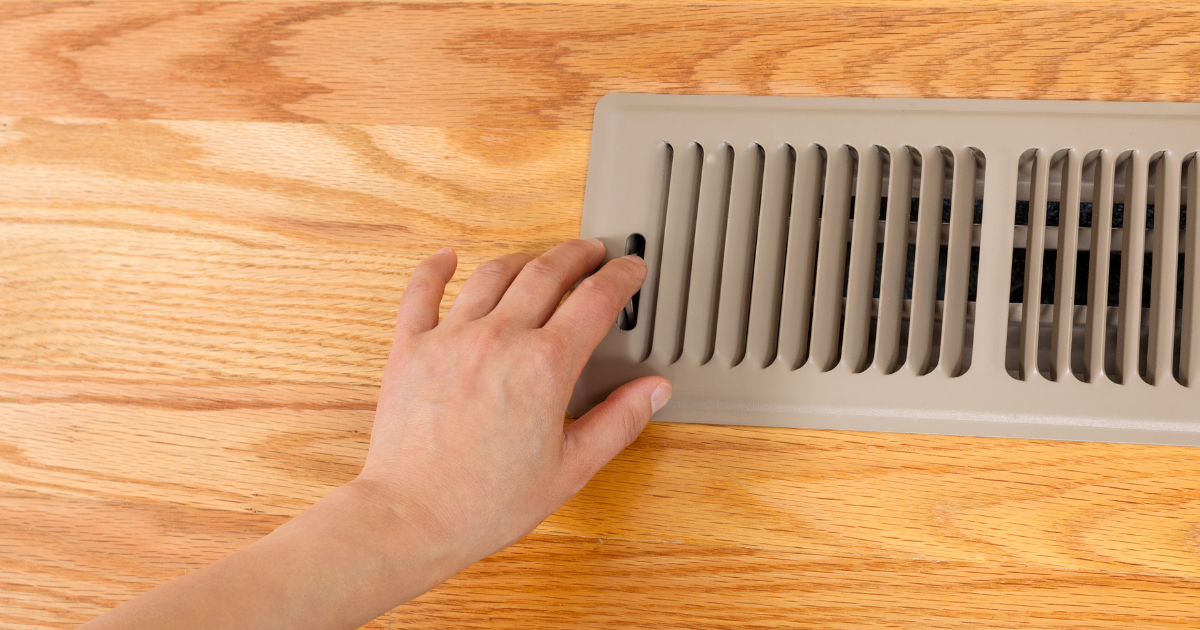
A furnace blowing cold air is most often caused by a failing igniter or flame sensor, a tripped limit switch, a thermostat set incorrectly, or a clogged air filter restricting airflow. Some of these are quick fixes, but a few point to a safety issue that should not wait, so knowing which is which matters before you try to troubleshoot it yourself.
Start With the Simple Checks
Before assuming the worst, a few things are worth ruling out yourself.
Check your thermostat setting. It sounds obvious, but a thermostat accidentally set to “fan on” instead of “auto” will run the blower continuously, including between heating cycles, which can feel like cold air blowing even when the furnace itself is working fine.
Check your air filter. A severely clogged filter restricts airflow enough that the air reaching your vents can feel cooler and weaker than normal, even though the furnace is heating correctly.
Check the thermostat’s actual temperature setting. If it is set lower than you expect, or a household member adjusted it, that is an easy explanation worth ruling out first.
When It’s Something More Than a Simple Fix
If you have checked the basics and your furnace is still blowing cold air, the cause is usually one of the following.
A failing igniter or pilot light. Modern furnaces use an electronic igniter rather than a standing pilot light. When it fails intermittently, the furnace may run its blower cycle without successfully igniting the burner, pushing unheated air through your vents.
A dirty or failing flame sensor. This small component confirms the burner has ignited. If it is dirty or malfunctioning, the furnace can shut off the burner as a safety precaution while the blower continues running, which feels like cold air.
A tripped limit switch. This safety control shuts off the burner if the furnace overheats, often due to restricted airflow. The blower may continue running to cool the system down, pushing cold air through your home in the process.
A gas supply issue. If gas flow to the furnace has been interrupted, the burner will not ignite at all, though the blower may still run on schedule.
Why This Is a “Call Soon” Issue, Not a “Wait and See” One
Several of the causes above, particularly anything involving the igniter, flame sensor, or gas supply, point to a combustion issue rather than a simple comfort problem. Gas-fired appliances in Ontario are required by law to be serviced by TSSA-registered contractors, and for good reason. The Technical Standards and Safety Authority notes that improperly maintained fuel-burning appliances are a leading source of carbon monoxide incidents in Ontario homes. A furnace that is cycling oddly or failing to ignite consistently is worth having inspected promptly rather than repeatedly reset.
How This Fits Into Broader Furnace Troubleshooting
We covered the fuller picture of warning signs worth watching for in 5 Signs Your Furnace Needs Service Before Winter, and if your furnace has been running fine overall but you have not had a seasonal check yet, our Fall Furnace Maintenance Checklist covers what a proper inspection includes, including the exact components most likely to cause the cold air symptom described here.
FAQ: Furnace Blowing Cold Air
Is it safe to keep running my furnace if it’s blowing cold air intermittently? It depends on the cause, which is exactly why a professional diagnosis matters. Some causes are simple comfort issues, while others involve combustion safety.
Can a dirty filter alone cause this? It can contribute, particularly to weak or cooler-feeling airflow, but a severely restricted filter can also trigger a safety shutoff, so replacing it is worth doing immediately either way.
Why does my furnace blow cold air for a minute before it warms up? This is often normal. Furnaces run the blower briefly before the burner fully heats the heat exchanger, so a short burst of cooler air at the very start of a cycle is expected.
Get It Diagnosed Properly
If your furnace is blowing cold air and the simple checks have not fixed it, contact us for prompt diagnosis. We offer 24/7 emergency response through the heating season, because this isn’t a problem that should wait.